








Updated YELO guide
Start with YELO’s current guide to building an EPK and planning a music release, then use the examples and checklist below.
OPEN THE CURRENT EPK GUIDEThis original YELO guide contains practical EPK examples, images and a detailed checklist for musicians.
What is an Electronic Press Kit or EPK?
An EPK, or electronic press kit, is a digital promotional package put together by musicians wanting to promote their band or solo act.
It’s essentially your musical identity and is a concise summary of your best work; including artist bio, photos, and links to your music.
This document creates a cohesive visual representation of your music and brand, and can be used to send journalists or booking agents when promoting your show.
Why is an EPK so important?
An EPK is used to promote you as a band or artist, and all your gigs. It can be used to send enquiring journalists, booking agents, and music industry reps.
Having a press kit on hand allows you to produce relevant material should the opportunity come knocking.
The goal of your EPK is not to overwhelm the receiver with content, but to make sense of who you are in an easy snapshot.
Pro tip: Keep one current master version and make sure the person handling bookings, media or management can access it.
How should I create my EPK?
Apps such as Canva have made putting together an EPK incredibly easy, and you can do a lot for free.
Check out this one by Sunshine Coast rock band Dellacoma:
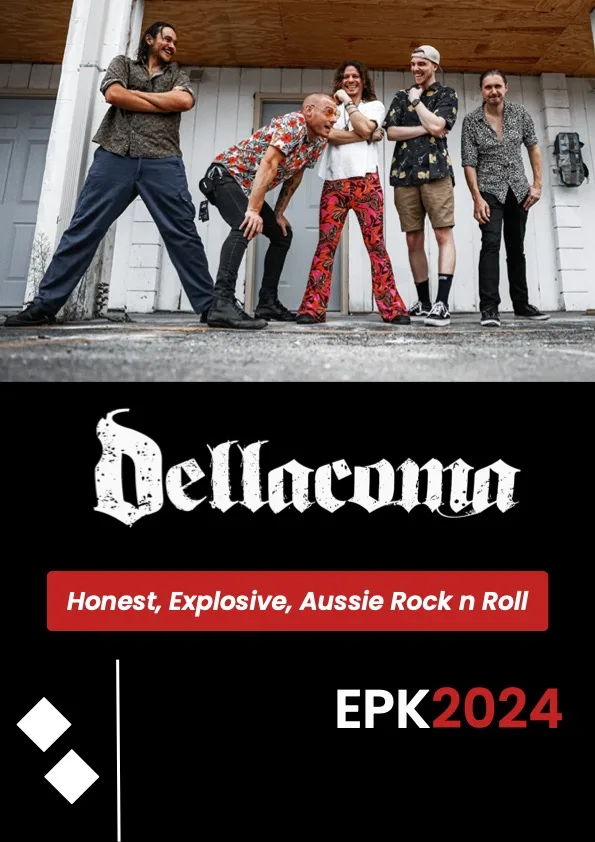
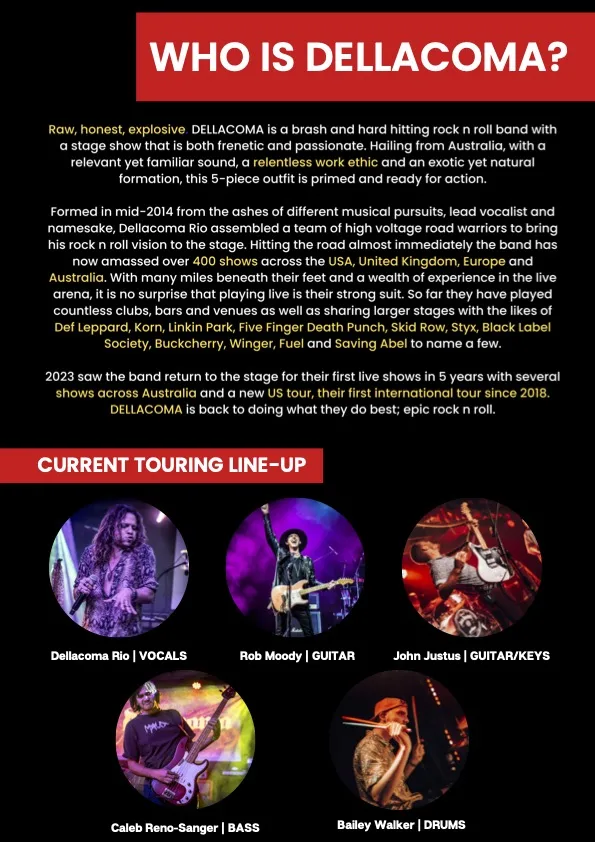
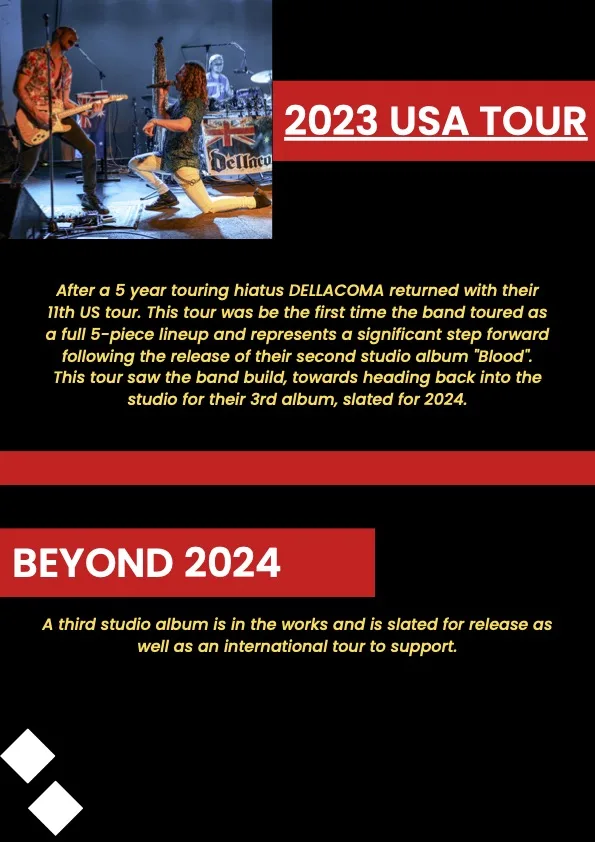
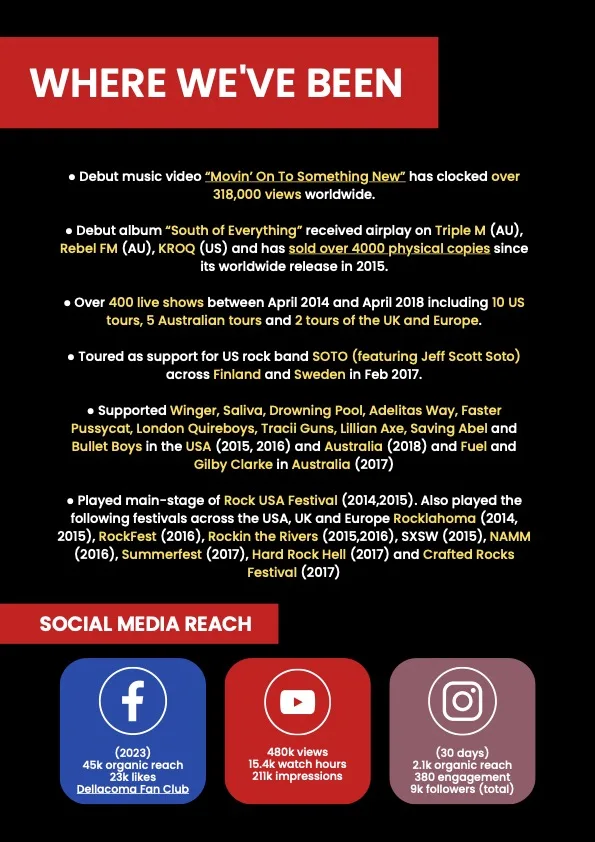
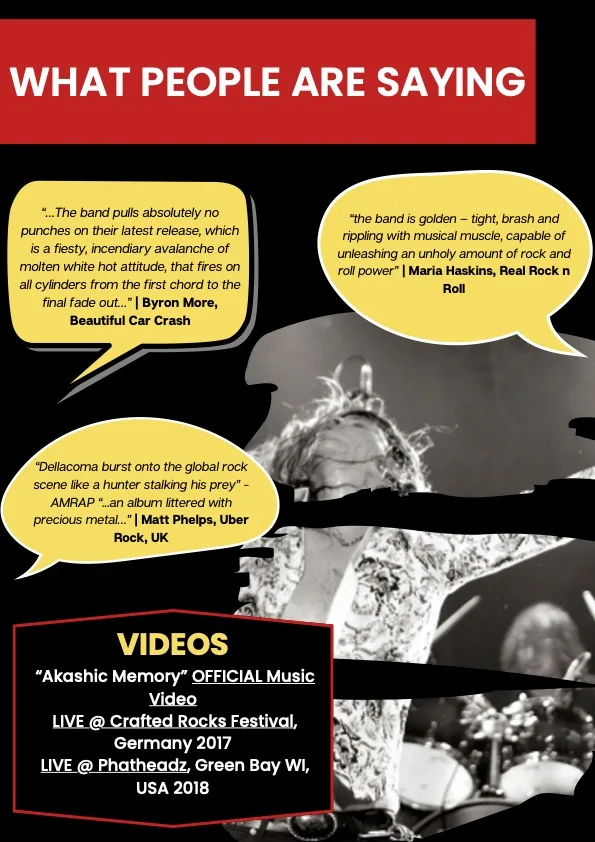
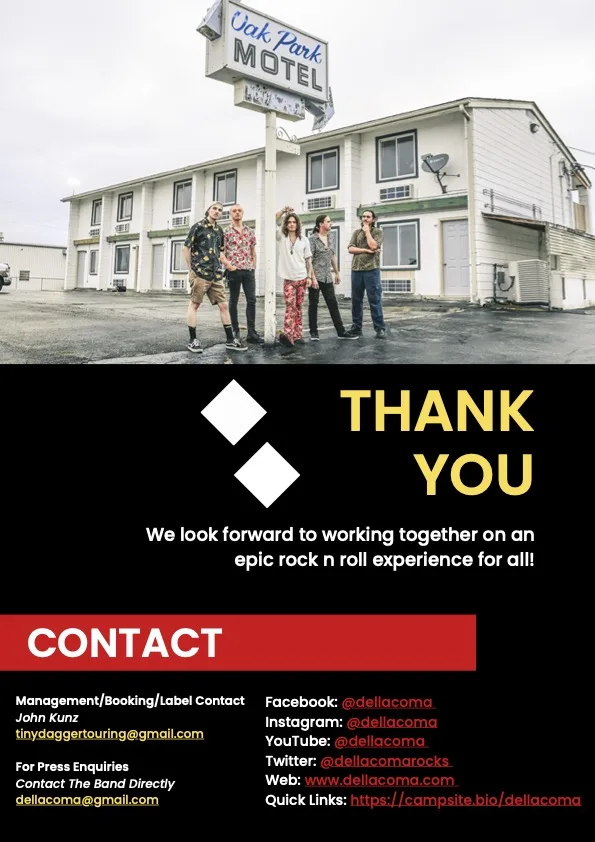
If design is not your strength, keep the layout simple or ask a designer for help. Clear information and working links matter more than elaborate graphics.
If you are starting out, a clean email with a short biography and links to a well-organised shared folder is completely acceptable.
Build the full EPK as your music, images, live footage and credits develop.
Pro tip: Don’t forget to regularly update your EPK, including your “assets” (photos, videos, logos) and web links.
What should be included in my EPK?
- Artist bio: A summary of who you are.
- Photos: A selection of professional photos.
- Music: Links to your music on platforms such as YouTube, Spotify, Bandcamp and SoundCloud.
- Press and testimonials: The nice things people have said about you, including press articles.
- Videos: Venues and festivals like to use videos on their websites to promote their artists.
- Social media: Links to the platforms you actively maintain. Add useful audience figures only when they are relevant to the opportunity.
- Logos and artwork (optional): Relevant artwork for your brand.
- Career highlights (optional): A short list of meaningful releases, tours, festivals, radio support or awards.
- Contact information: One clear email address and, where appropriate, a phone number for the person handling enquiries.
Artist bio:
Your electronic press kit should start with a strong biography. This allows promoters or venues to easily understand who you are.
Start with a quick introduction of yourself (less than 100 words). This could be thought of as your “elevator pitch”. Some festivals and promoters may require varying word lengths for artist bios so have some longer versions on hand.
Pro tip: Be sure to add where you are from and your music genre, eg. five-piece alt-rock band from Perth. This is so often forgotten by artists!
Also put this information in your social media bios. Journalists are often in a hurry and may need to grab some information at a glance, without even contacting you. Don’t let the opportunity slip for getting a mention in the media.

Photos:
Your EPK should contain a small selection of high-resolution photos, including portrait, landscape and live options. Include photographer credits and any usage conditions.
Musicians and photographers often use Google Drive, which makes it easy to send large files all at once.
Choose photos that align with your brand. Posed band photos are great and live shots capture your band’s energy.
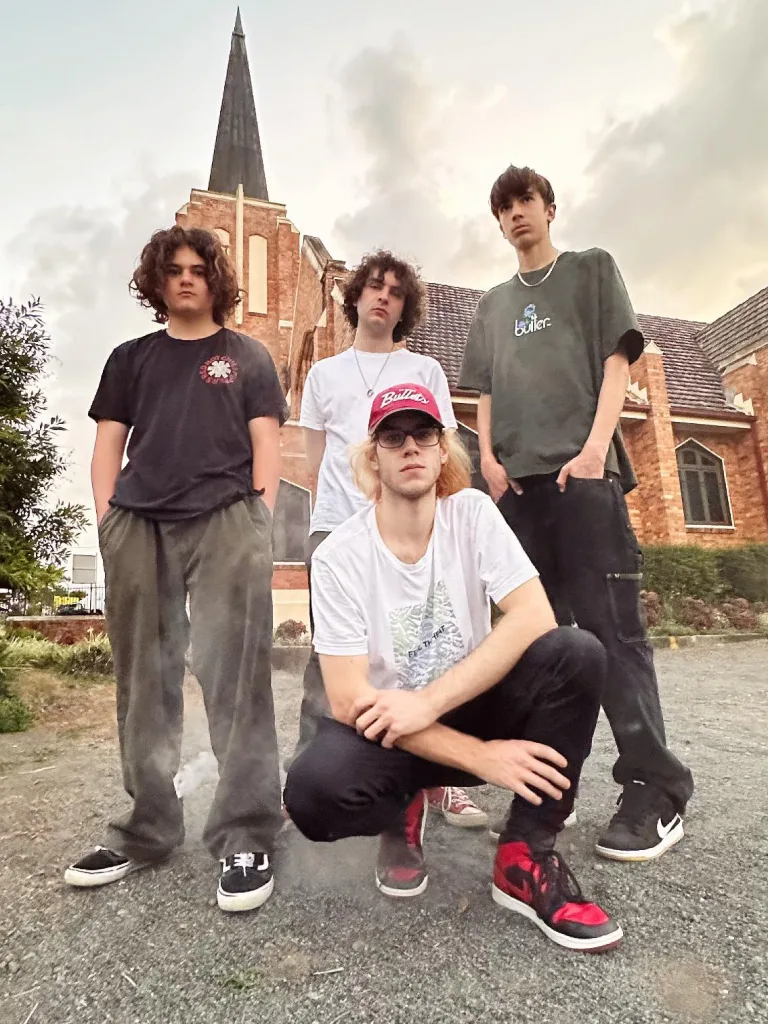
This photo of young alt-punk rockers, Acended, offers great mood and shows how a local church can provide an easy backdrop.
Pro tip: Supply portrait and landscape choices so media, venues and festivals can crop images for websites, social posts and print layouts.
Music:
Where can we find your music? Create a list of links to your best songs, but be selective. A promoter may only have time to have a quick listen to a song or two.
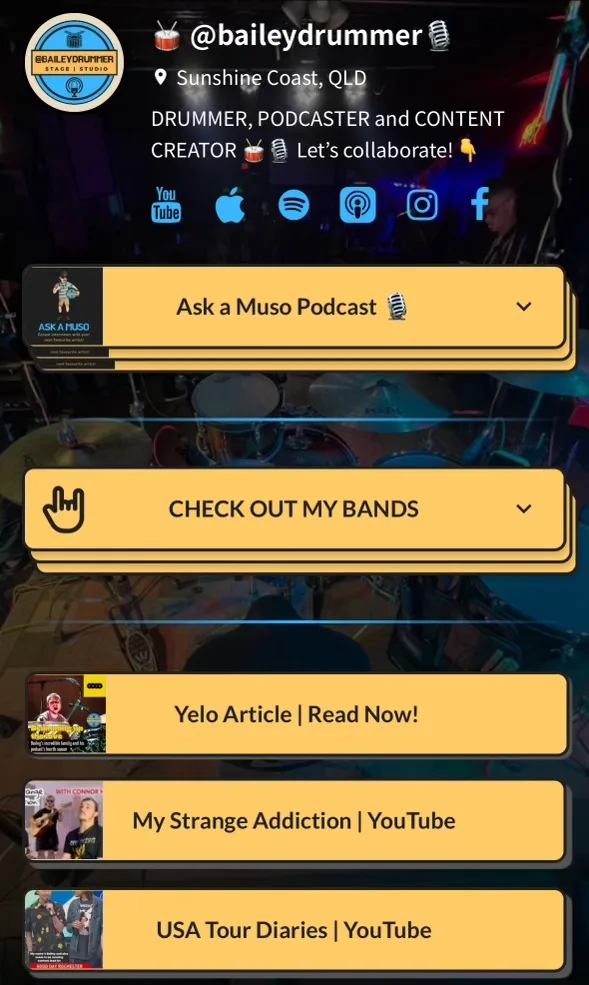
A simple artist website, shared folder or linking page can keep priority music, video and social links together. Check every link before sending the EPK.
Pro tip: Nambour musician @baileydrummer uses campsite.bio to keep all his web and music links in the one spot. He even adds links to his “Ask A Muso” podcast and recent press.
Press and testimonials:
If you’ve received press coverage it shows you have a story worth telling.
Having these available is helpful for writers when choosing a different news angle than used previously.
This is a win win for both of you, because you get to tell a new story each time, meaning more clicks and greater coverage.
Testimonials can assure bookers, especially if they can spot other bands or venues they’ve worked with.
Videos:
If you’re using your EPK to help book your shows, be sure to use live videos so that venues and bookers can see and hear you in action. Try to choose a video that’s as close to the venues you’re pitching to as possible.
Venues may require a video to aid in their promotion, such as for their website or to create a reel for their social media. Promoting a new album? Including a music video is a good tool to engage further interest in your songs.
Social media:
Highlight the social media platforms you are active on and provide each link.
Add audience figures only when they are accurate, current and useful to the person receiving the EPK. A smaller engaged audience is more meaningful than an unexplained vanity number.

Logos and artwork (optional):
Some musos have other projects on the go and may need to include relevant logos or artwork.
@baileydrummer has his own podcast and includes his logos with his artist photos in Google Drive. Pat Tierney sent Yelo his festival logo when he kick started the Sunshine Coast Blues & Roots Festival.
Career highlights (optional)
Established artists can include a short list of meaningful releases, tours, festivals, radio support, awards or notable support slots. Keep it selective and put the strongest recent evidence first.
Pro tip: Give each highlight enough context to make sense. A date, event name or outlet is more useful than a vague claim about momentum.
Contact information:
Your EPK should finish with one clear contact for bookings, media or general enquiries. If you have management, an agent or a publicist, name the correct person for each type of request.
Pro tip: New artists often handle these roles themselves. Make it obvious who should receive booking and media enquiries.
Ready to build the current version? Use YELO’s updated EPK and music release guide in YELO’s music resources.
OPEN THE EPK GUIDEMore for artists: YELO’s current EPK and music release guide and Queensland music grants and opportunities.