








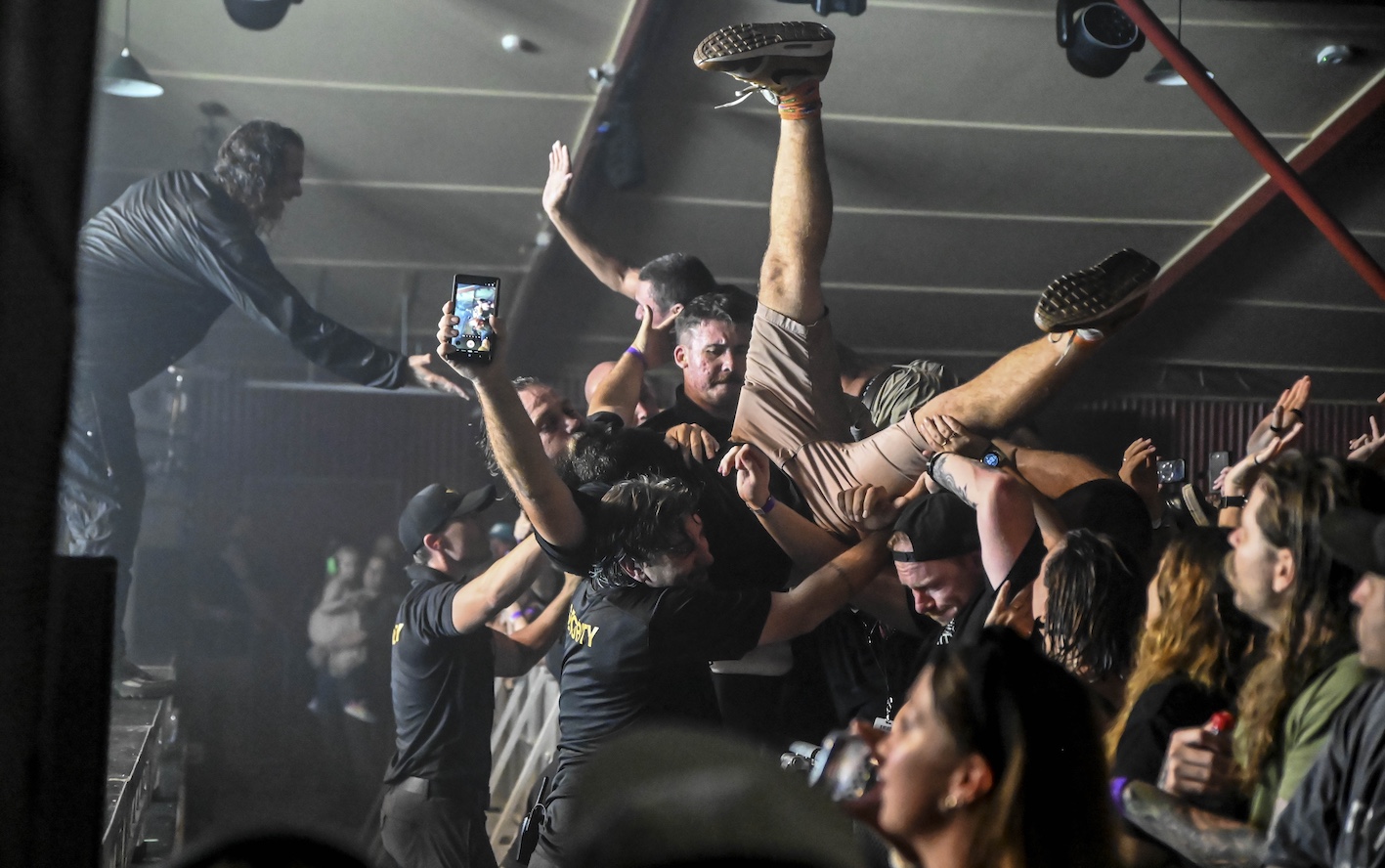
Crowd surfing for a sold-out Amity Affliction show at Banana Bender Pub on the Sunshine Coast earlier this year. Photo: Matt Warren.
Sunshine Coast Council has put a proposed 7,000-seat Maroochydore arena and an expanded Sunshine Coast Stadium at the centre of its plans for the Brisbane 2032 Olympic and Paralympic Games, raising a bigger question for the region’s music scene: will the Games finally deliver the live-music infrastructure the Coast has lacked for years?
The projects were highlighted on October 6 as Sunshine Coast Council marked the Brisbane 2032 emblem reveal and outlined the region’s growing role as a Co-Host City.
For music fans, the important part is not the sporting program itself. It is what these venues could mean for concerts, touring artists and cultural events before, during and long after the Games.
The Maroochydore arena is the big one
Sunshine Coast Council says momentum is building around the proposed arena and cultural precinct in Maroochydore City Centre, with planning and design work continuing. Current Sunshine Coast investment material describes a 7,000-seat multi-purpose arena planned alongside the 2032 Athlete Village and broader cultural precinct.
The arena is intended to attract entertainment, cultural and community events beyond the Games, giving the Coast a purpose-built option for larger indoor concerts and touring productions.
The Sunshine Coast has spent years debating where large indoor concerts, touring productions and major cultural events are supposed to go.
YELO has previously reported on University of the Sunshine Coast research into the region’s nightlife, which found transport, safety, quality and a sense of place all influence whether people actually use venues and precincts.
That research also pointed to the challenge of the Coast operating as a spread-out string of centres rather than one obvious entertainment district.
Sunshine Coast Stadium is getting bigger too
The other major project is the Sunshine Coast Stadium expansion at Bokarina.
Sunshine Coast Council says the upgraded stadium will have permanent seating for more than 10,000 people, capacity for up to 14,500 with grass mounds, and will expand to 20,000 during the Games.
Football preliminary matches are proposed for the venue in 2032, but its longer-term value is broader: a larger regional stadium gives the Coast more capacity to compete for major touring events once the Olympic infrastructure is in place.
The stadium is already part of the Coast’s concert map when major productions arrive. A larger version could make that proposition considerably stronger.
2032 is already tied to Queensland nightlife policy
The live-music conversation around Brisbane 2032 is bigger than bricks and seats.
Queensland’s current nightlife reform agenda is explicitly looking towards 2032, with policies aimed at strengthening grassroots venues, regional touring and opportunities for local artists. YELO has been following that push through the Queensland Nightlife Economy Action Plan and the Homegrown initiative.
Sunshine Coast Council’s wider 2032 legacy planning has also flagged arts, culture and First Nations heritage as part of what the region wants to showcase to a global audience.
Better transport, larger event infrastructure, a proposed indoor arena, tourism investment and nightlife policy are now being developed in parallel.
The real test is whether those pieces create a music and cultural legacy that locals can actually use when the Olympic flags come down.
A once-in-a-generation opportunity
Sunshine Coast Mayor Rosanna Natoli described Brisbane 2032 as a “once-in-a-generation opportunity” to strengthen the visitor economy, support local businesses and accelerate investment in infrastructure.
Visit Sunshine Coast CEO Matt Stoeckel also pointed to the years before 2032, saying new accommodation, better connectivity and visitor experiences could strengthen the region well before the Games begin.
For the music industry, that lead-up matters just as much as the fortnight of Olympic competition.
A region with stronger transport, a serious indoor arena, a larger stadium and a busier visitor economy has more tools to attract touring artists and major events. But infrastructure alone does not create a scene. The grassroots rooms, promoters, artists and audiences operating every week still have to be part of the plan.
That point matters on a Coast that has already lost important live-music rooms. YELO has reported on the closures of Solbar in Maroochydore and The Station at Birtinya, both significant stops in the local and touring circuit. A major new arena would add capacity, but it cannot replace the small and mid-sized rooms where scenes are built.
Brisbane 2032 is still almost six years away. On the Sunshine Coast, however, the question is starting to shift from what the Games might bring to what the region intends to keep.
Source: Sunshine Coast Council media release, October 6, 2026.