








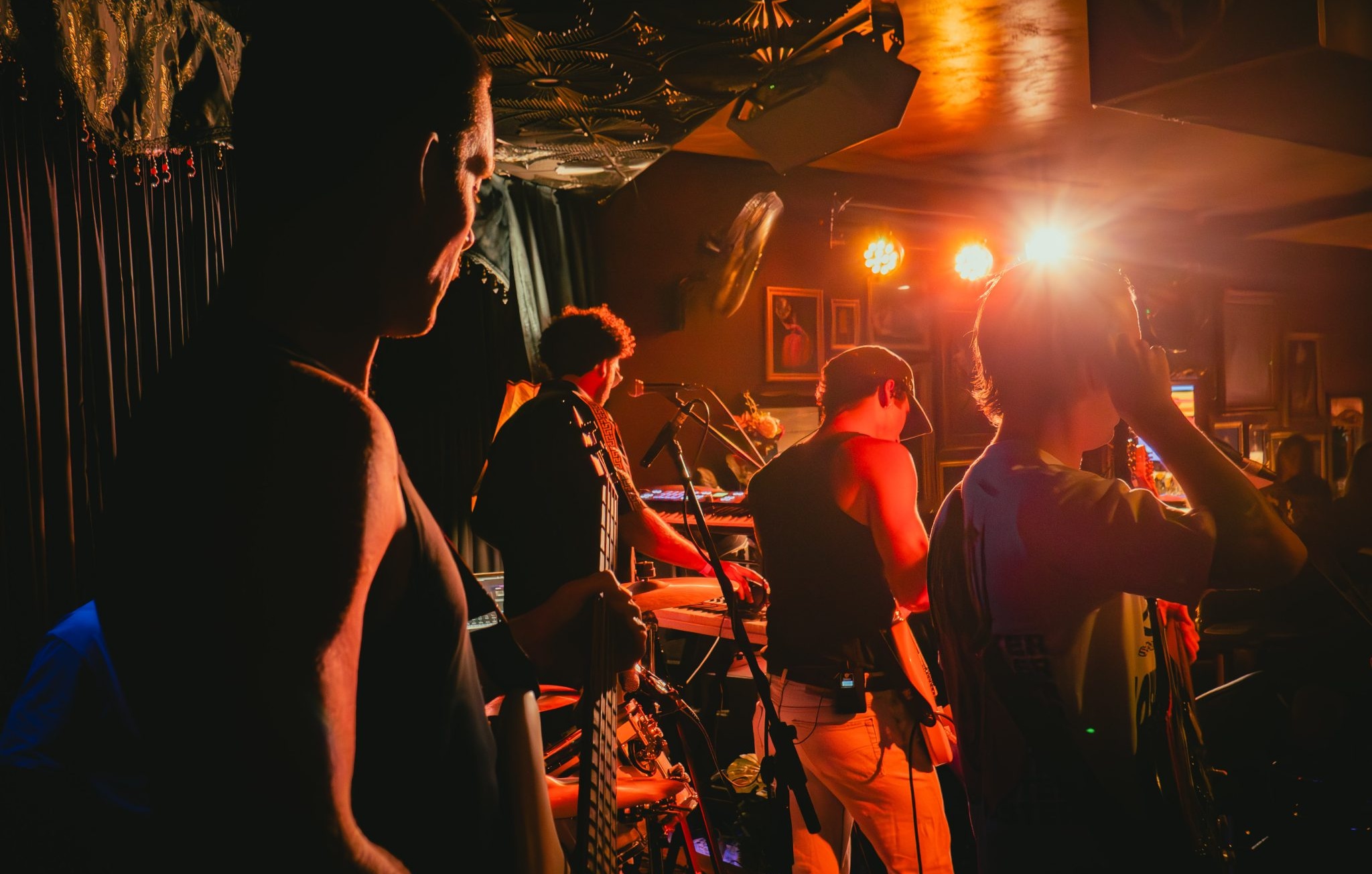
Thirst Trap perform at The Presynct in Nambour, one of the Sunshine Coast venues helping build the region’s grassroots live music scene. Photo: Marc Roberts.
Queensland artists could get more chances to open for major touring acts under new nightlife reforms aimed at strengthening grassroots venues, regional touring and the state’s live music economy.
The State Government has announced the first initiatives tied to its Nightlife Economy Action Plan, following the creation of Queensland’s Night-Life Economy Commissioner role in 2024.
The reforms are aimed at strengthening the state’s live music venues, regional touring networks and night time economy ahead of Brisbane 2032.
The first initiative, Homegrown, will give major touring acts incentives, including discounts on state owned venues, if they include Queensland artists as support acts. Queensland on Tour is also being expanded to showcase more regional venues and connect them with national music promoters.
Work is also underway on licensing and fee reforms aimed at making it easier and more financially viable for grassroots venues to host live music.
A chance to play to someone else’s crowd
In plain terms, Homegrown could mean a local act gets the opening slot when a major touring artist plays a state owned venue in Queensland.
For emerging artists, a support slot can put them in front of people who did not already know their name. For a young band, solo artist or regional act, one strong opening set can mean new fans, industry attention, better photos, live experience and another reason to keep going.
The question will be whether those slots are paid properly, chosen carefully and spread beyond the artists who already have industry access.
Minister for Youth Sam O’Connor said the reforms were about creating more opportunities for artists, expanding Queensland on Tour and reducing red tape and fees for grassroots venues.
“A thriving live music industry supports local businesses, creates jobs, attracts visitors and helps build vibrant experiences across Queensland,” Mr O’Connor said.
Attorney General Deb Frecklington said work was underway on initiatives to reduce liquor licence fees for venues that host live music, with the aim of helping venues put on more entertainment and support local musicians.
“We’ve been listening to industry,” Ms Frecklington said.
Getting more tours beyond the capital city circuit
The regional touring part could be just as important. If the expanded program works, it should put more regional rooms in front of national promoters, not just more names on a policy page.
That could mean more artists seeing towns outside Brisbane as real tour stops, not risky extras tacked onto the end of a run.
For the Sunshine Coast, the announcement lands in a region already testing what grassroots live music support can look like. Nambour’s live music scene has been building around venues, rehearsal rooms, touring shows and a Special Entertainment Precinct designed to make live entertainment easier in the town centre.
The Presynct has become one of the clearest local examples, with local and touring lineups, oddball nights and the kind of grassroots room where emerging artists can build confidence before stepping onto bigger stages.
The test will be whether the program reaches the rooms that actually hold local scenes together, from small bars and theatre spaces to regional venues already doing the hard work of building audiences.
From small rooms to bigger stages
Night Life Economy Commissioner John “JC” Collins said his statewide listening tour made it clear grassroots live music venues needed urgent support.
“Stronger venues create stronger opportunities for Queensland artists,” Mr Collins said.
For regional scenes, that is the heart of it. Bigger acts can bring attention, but grassroots rooms are where artists actually start, fail, improve, connect and return.
Venues do not just need one off moments. They need conditions that make regular live music possible, from fees and licensing to audience building, transport, promotion and touring networks that reach beyond the major city circuit.
The questions now
The reforms sound promising, but the real measure will be what happens once they move from announcement to actual gigs, actual venues and actual support slots.
With Homegrown, the value will depend on how those opening slots are handled. A local opener should be paid properly and chosen because they make sense for the room, the bill and the audience, not because a promoter needs a Queensland name on a poster.
The regional touring promise will need the same kind of follow through. If Queensland on Tour is going to connect more venues with national promoters, towns outside Brisbane need to be treated as part of the touring circuit, not as extra dates that only happen when the numbers are easy.
Venue reform will come down to the practical details people rarely see from outside a room, including fees, licensing, staffing, noise, transport and whether a small venue can keep putting bands on without every night feeling like a gamble.
Queensland already has the artists, rooms and regional audiences to build something stronger. The question is whether these reforms can pull those pieces together into a live music pathway that reaches beyond the obvious stages and into the places where scenes actually grow.