








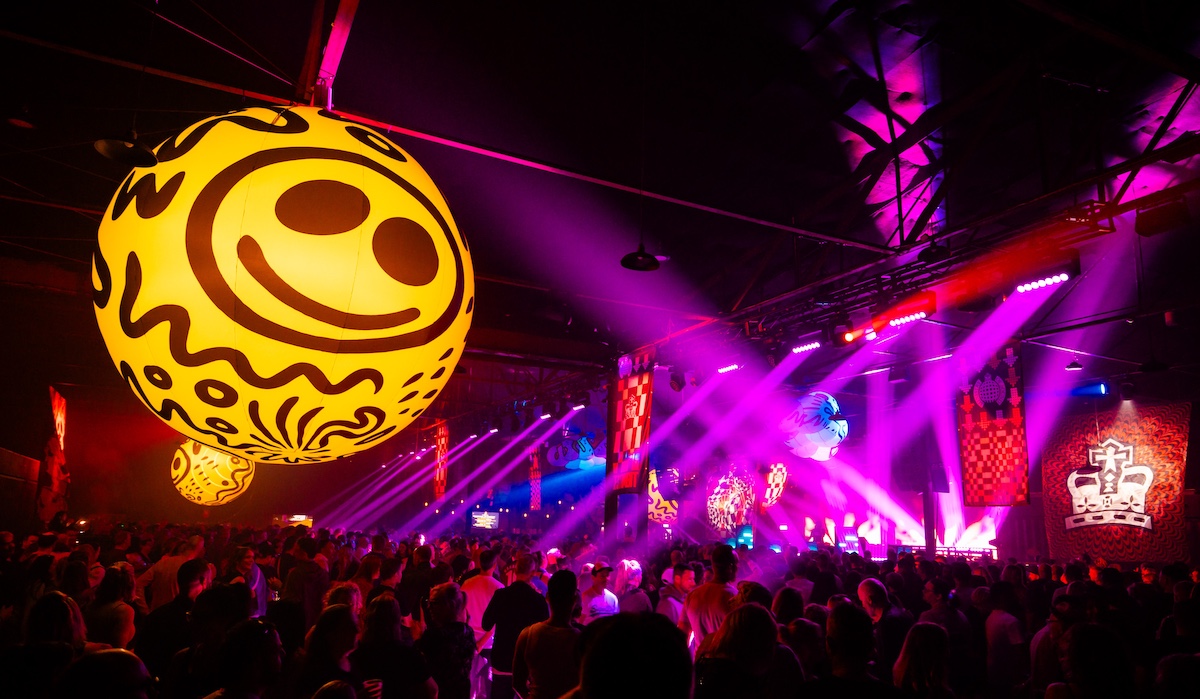
Ministry of Sound: Testament 90s in Melbourne in 2025. The event comes to Venue 114 on Sunday, July 26. Photo: Ashlea Caygill.
From sunrise DJs and sober raves to daytime clubbing and festivals that finish before bedtime, the Sunshine Coast is discovering that you do not need darkness to have a dance floor.
DJs are appearing in cafés in the morning. Raves are starting at midday. Sober dance events are popping up, while club nights are being reworked for people who would quite like to be home before midnight.
For years, the Sunshine Coast’s habit of closing early has been treated as evidence of a weak night time economy.
But the region may be building something else entirely: an entertainment culture shaped around the way people already live here.

The party is starting earlier
On Sunday, July 26, Ministry of Sound TESTAMENT will take over Venue 114 in Bokarina from midday to 8pm.
The 18+ warehouse style session brings 90s club culture to the Sunshine Coast with international dance heavyweights Danny Tenaglia, Darren Emerson, Brandon Block and Altern 8, alongside Australian DJs including John Course and DÉ SAINT.
But almost as interesting as who is playing is when they are playing.
The event is being openly promoted around daytime dancing, classic club music and being home by nightfall. The early finish is not an inconvenience buried in the event details. It is part of the appeal.
Tickets and event information are available from Venue 114.
And Testament is not an isolated example.
Daytime dance floors are already here
Pulse in Maroochydore hosted Bed By 10 on July 18, an over 30s daytime clubbing event built around exactly what its name promises.
Sunny Side Up’s first electronic music festival at Aussie World sold out.
It returns on September 5 with Pendulum DJ Set, What So Not, Hot Dub Time Machine, Anna Lunoe, Habstrakt, Latifa Tee, Raw Ordio and more. The festival runs from 5pm to 10pm.
YELO has also seen sober dance events and DJs appearing in café spaces from early in the day.
Individually, these events might look like novelties. Together, they point towards a broader shift away from the traditional formula of drinks at 10pm, club at midnight and home sometime after sunrise.
A nightlife built around the morning
People move to the Sunshine Coast for beaches, surfing, family life, camping, hinterland adventures and a slower pace.
The region has never built its identity around staying out until dawn. People come here to enjoy the morning.
That does not mean they do not want music, community or dancing. They may simply be less interested in the traditional big city formula of drinking until 2am and sacrificing the next day.
On the Sunshine Coast, the morning is often too good to waste.
A party that finishes at 8pm can coexist with the surf forecast, children’s sport, a mountain walk or packing the car for a weekend away.
It gives people the crowd, bass and release of a night out without demanding the whole weekend in return.
Maybe the Coast was never meant to party like a city
Research from the University of the Sunshine Coast has already identified some of the forces shaping the region’s night time economy.
Researchers pointed to the Coast’s early to bed, early to rise “sparrow lifestyle”, limited public transport, financial pressures and a region spread across multiple centres rather than one concentrated entertainment district.
Lead researcher Dr Lenny Vance has previously described the Sunshine Coast as a “spread out string of villages”, with the research recommending the development of local entertainment hubs rather than relying on one central nightlife precinct.
Those limitations have not disappeared. Daytime events do not remove the need for better public transport, later options or more places for emerging artists to perform.
But they raise a more interesting question than whether the Sunshine Coast has enough nightlife.
What kind of entertainment culture actually works in an early rising coastal region?
Getting people off the couch
There is another problem facing live entertainment everywhere: leaving the house.
Going out now competes with streaming, gaming, food delivery and increasingly comfortable digital lives.
A daytime rave offers something the lounge room cannot: bodies, bass and a shared experience.
But it does so without asking people to surrender the entire night and the following morning.
For parents, longtime dance music fans, people who do not drink, early risers or anyone who simply cannot be bothered beginning their night at 10pm, that is a pretty attractive proposition.
Perhaps the Sunshine Coast does not need to overcome its early nights at all.
We may still go to bed early.
We’re just learning to get the dancing done first.
Looking for more live music? Head to the Sunshine Coast gig guide for upcoming gigs, launches and local shows.