








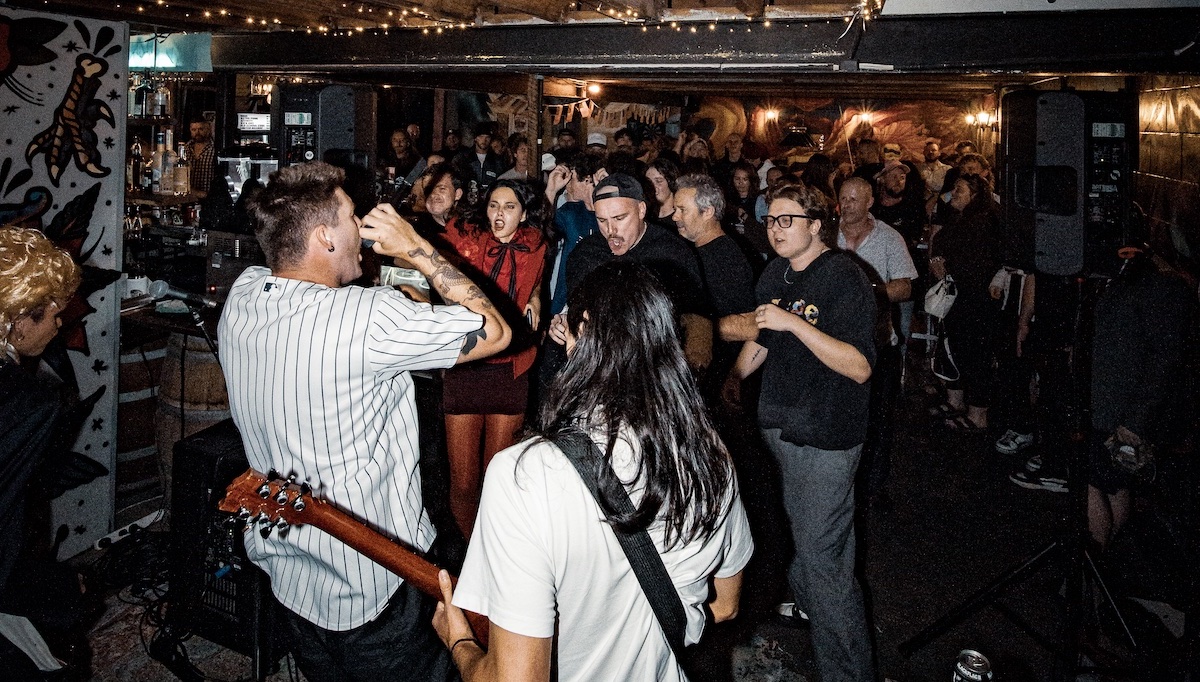
A crowd fills Blackflag Mooloolaba for The Drop Beers. Photo: Lewis Venz.
NSW has passed a bill to strengthen protections for live music venues, concerts and festivals. Queensland has its own nightlife reform plan, but the move across the border raises a question for the rooms putting bands on here: what changes next?
Queensland update: public feedback on concert conditions at Suncorp Stadium, Cbus Super Stadium and People First Stadium closes at 11.59pm on Tuesday, October 6. The surveys cover issues including noise, finishing times, transport and future concert conditions.
The Contemporary Music Bill 2026 passed both houses of NSW Parliament on September 24. Parliament lists it as awaiting assent, so the new measures should not yet be treated as protections already in force.
The bill is designed to give music a more permanent place in government decision-making. According to the NSW Government, it will establish a three-tier recognition scheme for live music venues, with tailored support that could include extended trading hours and grants. Dedicated and significant venues will also be able to access free mediation for disputes.
Other changes address noise measurement at major outdoor events, stop government agencies and councils making decisions solely on music genre, and prevent a concert from being classed as a large-scale music festival simply because more than four acts are on the bill.
Where Queensland stands
Queensland is pursuing a different set of reforms. Its Nightlife Economy Action Plan, unveiled in July, commits to modernising entertainment sound rules, including a review of default limits and how sound is measured, while considering ways to support existing venues.
The plan also includes incentives for major acts to book Queensland support artists at state-owned venues, an expanded Queensland on Tour program for regional music, and consideration of reduced liquor licence fees for grassroots venues that regularly host live music.
YELO has previously reported on the unfinished parts of Queensland’s nightlife reform agenda. The NSW bill sharpens the practical questions for this state: when will the sound review produce new rules, which venues will qualify for support, and what certainty will operators have when they invest in original music?
Queenslanders can now have their say
Queensland is also seeking public feedback on future concert conditions at Suncorp Stadium, Cbus Super Stadium and People First Stadium. The consultation covers finishing times, noise and transport, among other conditions. Feedback on Suncorp will inform the review of its temporary 2026 cap of 21 concerts. Find the three venue surveys and written-submission details here. Submissions close at 11.59pm on Tuesday, October 6.
NSW’s bill will not change the rules for a venue in Nambour, Brisbane or the Gold Coast. It does, however, give Queensland’s music community a concrete model to examine as its own action plan moves from commitments to delivery.
Updated October 2026.
Looking for more gigs?
Find your next show in YELO’s gig guides across Queensland.