








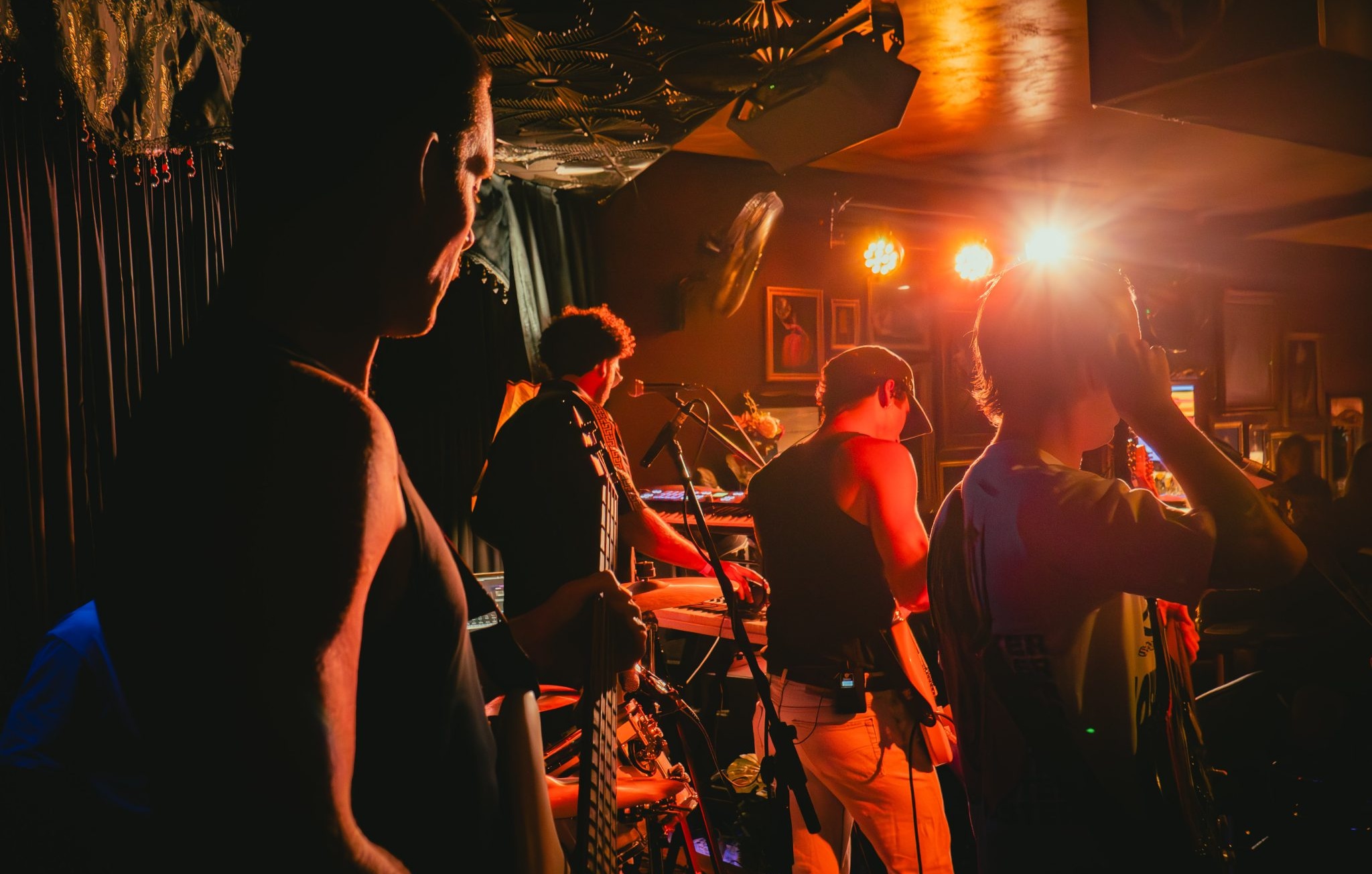
Thirst Trap perform at The Presynct in Nambour, one of Queensland’s grassroots live music venues. Photo: Marc Roberts.
Queensland’s nightlife reform push is not finished, with key recommendations still unresolved as BIGSOUND puts live music, venue pressure and Brisbane 2032 back in focus.
With BIGSOUND filling Fortitude Valley this week, the unfinished part of Queensland’s nightlife reform agenda is back in the spotlight.
Queensland Night-Life Economy Commissioner John “JC” Collins delivered his Moonside report with 62 recommendations aimed at making the state’s nightlife safer, more vibrant and easier for venues and businesses to operate.
The State Government’s Nightlife Economy Action Plan 2026–2032 supports, supports in principle or supports in part 41 of those recommendations. Another nine were noted, leaving 12 not supported.
That means the first action plan is a significant move, but not the end of the argument about how Queensland should operate after dark before the world arrives for Brisbane 2032.
What Queensland has agreed to
Some of the strongest live music measures have already made it into the plan.
They include entertainment sound reforms designed to give venues more certainty, the Homegrown policy encouraging major touring acts to put Queensland artists on support bills, and an expanded Queensland on Tour program aimed at building stronger regional touring circuits.
The Government has also committed to practical support for grassroots venues, including work on liquor licence discounts for businesses that regularly host live music, plus a new special event trading framework.
YELO covered those first reforms in July, when the focus was on what Homegrown and the wider nightlife plan could mean for Queensland artists and venues.
But some of the bigger changes remain unresolved
The recommendations left outside the Government’s supported list include some of the harder regulatory questions around late-night transport, trading rules and venue operations.
Among the proposals not backed at this stage are easing ID scanner requirements for some smaller venues, trialling staggered closing times, extending late-night train services through Fortitude Valley on weekends, exploring 24-hour supermarkets in nightlife precincts and relaxing alcohol sales restrictions on Good Friday and Christmas.
Collins has argued Queensland’s regulations have fallen behind other jurisdictions and placed too much of the burden on venues. When the Moonside report was released in July, he said the state had too often treated nightlife as a nuisance rather than something worth building.
BIGSOUND is the obvious test case
Fortitude Valley this week is also showing what the state says it wants more of.
In the lead-up to BIGSOUND, Collins pointed to the Valley’s Special Entertainment Precinct as proof that live music, walkable venues and nightlife protections can work together. BIGSOUND says the event generated more than $20 million in economic impact in 2025.
For live music, that matters because the nightlife debate is bigger than how late people can buy a drink.
It is about whether a small venue can afford to keep putting bands on, whether noise rules recognise existing entertainment precincts, whether people can get home after a late show, and whether young Queensland artists have enough stages to build an audience before they are expected to fill bigger rooms.
Those pressures are not limited to Brisbane. The same questions are playing out across the Sunshine Coast, Gold Coast and regional Queensland as venues close, new rooms open and operators try to make live music stack up financially.
The next test is delivery
The Government says the first deliverables under its action plan are expected by the end of 2026, with the strategy running through to 2032.
That gives Queensland six years to work out which reforms make a real difference to the rooms, artists and audiences that actually create a nightlife economy.
The 41 recommendations backed in full, in principle or in part are the beginning. The more interesting question now is what happens to the rest.