








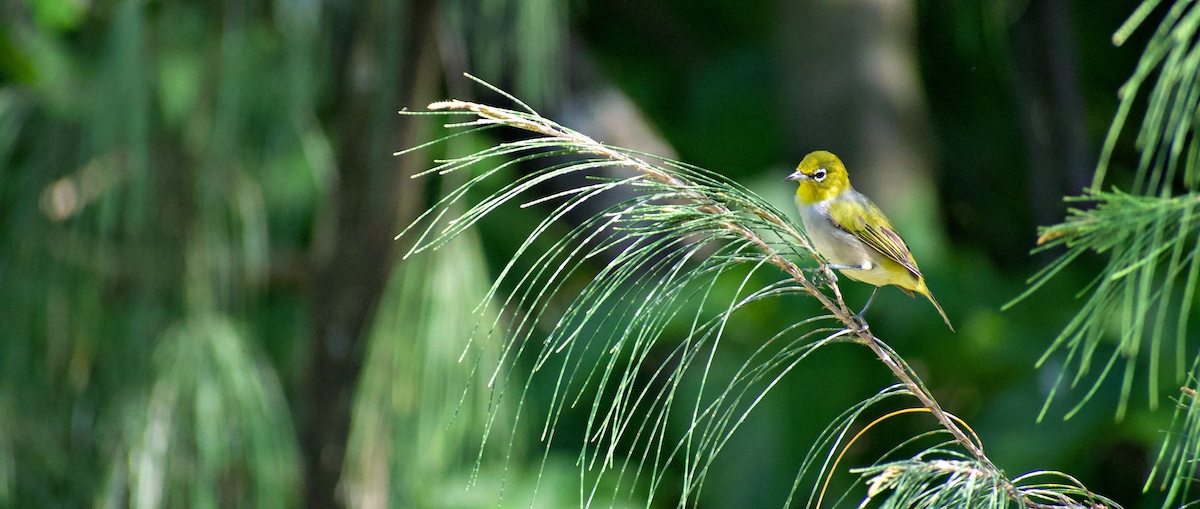
A new study from the University of the Sunshine Coast has found that silvereyes living on islands off Queensland have developed distinct song dialects of their own. The findings add a cultural twist to how researchers understand birdsong.
Researchers found that silvereyes on separate islands were singing in ways more similar to each other than to birds on the nearby mainland. That was the case even though the islands were more than 100 kilometres apart.
UniSC Associate Professor of Animal Ecology Dominique Potvin said the finding challenged long-held assumptions about how birdsong evolves.
“We expected that geography and genetics would explain differences in dialect, but they didn’t,” Dr Potvin said.
“Instead, these island birds have developed their own shared song culture, independent of distance, ancestry or how long the populations have been isolated.”
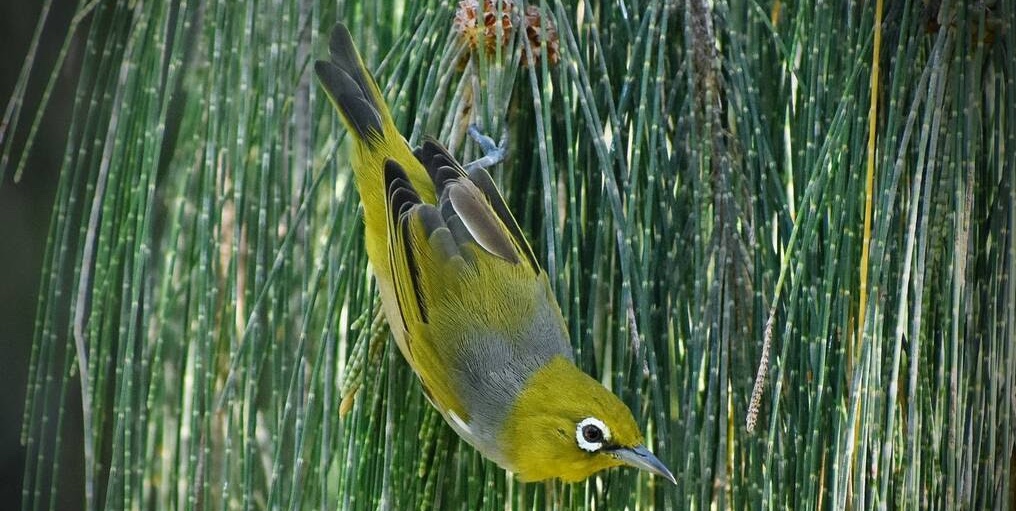
Silvereyes on Queensland islands have developed distinct song dialects. Photo: Supplied.
Island birds are singing differently
The research paper, led by UniSC Honours graduate Marie Robert, compared silvereye songs across four populations in South East Queensland. These included the Sunshine Coast and Fraser Coast on the mainland, along with Heron Island and Lady Elliot Island offshore.
Researchers found the island birds were larger, but tended to sing higher-pitched and longer syllables than their mainland counterparts.
Their repertoires were also more diverse, with the differences in song not explained by geography or genetic relatedness alone.
Birdsong shifts faster than DNA
“Birdsong is socially learned, so it can change much faster than DNA,” Dr Potvin said.
The findings draw a parallel with human language, where island communities often develop dialects distinct from those on the mainland.
Dr Potvin said previous research had also found differences between the songs of silvereyes living in the country and those in urban areas.
“It’s a reminder that animals have cultural traditions too,” she said.
The work forms part of the broader Leaf to Reef initiative, which explores the biodiversity of Lady Elliot Island and its connection to the wider Great Barrier Reef.
Leaf to Reef was supported by funding from the Reef Trust Partnership between the Australian Government’s Reef Trust and the Great Barrier Reef Foundation, the Queensland Government, Lendlease and the Fitzgerald Family Foundation.
Listen to the sound of the Heron Island Songbird: